 here are some facts about the brain
 F1. Your cerebral cortex is about as thick as a tongue depressor.
F2.The brain feels like a ripe avocado and looks pink because of the blood flowing through it.
F3.Eating foods rich in vitamin E, beta-carotene, and vitamin C may help lower your risk of Alzheimer's disease.
F4.Your brain is about 1300-1400 cubic centimetres in volume, about the size of a cantaloupe and wrinkled like a walnut.
F5.Humans have the most complex brain of any animal on earth.
F6.Your brain is divided into two sides. The left side of your brain controls the right side of your body; and, the right side of your brain controls the left side of your body.
F7.the cerebral cortex grows thicker as you learn and use it.
F8. A cooked potato can jump-start your brain when you're feeling foggy.
F9. Lavender can help you sleep
F10. A newborn baby's brain grows almost 3 times in course of first year

how the cerebrum works.
The cerebrum is the largest part of your brain. It's what you probably visualize when you think of brains in general. The outermost layer of the cerebrum is the cerebral cortex, the "gray matter" of the brain. Deep folds and wrinkles in the brain increase the surface area of the gray matter, so more information can be processed.
The cerebrum is divided into two halves (hemispheres) by a deep fissure. The hemispheres communicate with each other through a thick tract of nerves, called the corpus callosum, at the base of the fissure. In fact, messages to and from one side of the body are usually handled by the opposite side of the brain
 |
| left hemisphere (red) parietal lobe |
what it does.
The cerebrum is responsible for things like perception, imagination, thought, judgment, and decision making
how the brain works.
All of these tasks e.g seeing,running,eating are coordinated, controlled and regulated by an organ that is about the size of a small head of cauliflower: your brain.
In this article, we will examine the structures of the brain and what each one does. With this general overview of the brain, you will be able to understand concepts such as motor control, visual processing, auditory processing, sensation, learning, memory and emotions, which we will Your brain, spinal cord and peripheral nerves make up a complex, integrated information-processing and control system. The scientific study of the brain and nervous system is called neuroscience or neurobiology. Because the field of neuroscience is so vast, and the brain and nervous system so complex, this article will start at the beginning and give you an overview of this amazing organ.
 how to keep it healthy.
 Step 1 - Eat a Brain-Healthy Diet.
what is a brain healthy diet
It is one that is rich in omega-3 fatty acids (commonly found in fish, specially fed chicken (via their eggs) some fruits and vegetables), essential amounts of proteins only, plentiful antioxidants (found in a host of natural foods) lots of fruits and vegetables, foods rich in vitamin B (such as lentils); minimum amounts or no trans fats; and fiber-rich non-processed carbohydrates.
Step 2 - Stay Mentally Active
Every year resolve to learn something new. Let it be a language, a skill, some dance, something new each year. Keep your mind active.
Stay away from TV as much as you can, and replace it with the computer.
Take classes in something, and read as much as you can. The brain needs this stimuli to maintain its cognitive levels.
Step 3 - Exercise Regularly
Nothing is as important for the body and brain as regular exercise.
Regular exercise always increases circulation, improves one coordination, and helps prevent conditions that increase the risk of dementia such as heart disease, stroke and diabetes.
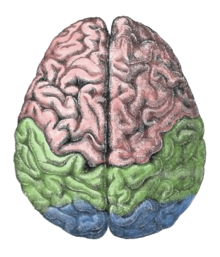 |
| two hemispheres |
Do not remain a recluse. Be with your friends, become a volunteer and work with people, take regular outings to new places, and new countries. Let your eyes see new sights, your ears new sounds, taste new foods.
Step 5 - Sleep Well
here are some good links:
http://www.childrensuniversity.manchester.ac.uk/interactives/science/brainandsenses/brain.asp
http://www.insidestory.iop.org/insidestory_flash1.html
